

Dow Jones Industrial Average futures rose 503 points, suggesting an open gain of more than 550 points when regular trading resumes on Tuesday. S&P 500 and Nasdaq-100 futures also implied a positive Tuesday start for the two indexes.
Citing people familiar with the plan, Bloomberg reported the Trump administration is drawing up a $1 trillion infrastructure proposal. The report said a preliminary version being prepared would set aside majority of the money for traditional infrastructure such as roads and bridges, though funds would also be reserved for 5G wireless infrastructure and rural broadband.
The overnight moves Monday evening followed a striking rebound in U.S. equity markets during the regular session.
The Dow Jones Industrial Average closed 157.62 points higher on Monday after the blue-chip index fell more than 760 points earlier in the session. The S&P 500 gained 0.8% to end the day at 3,066.59 while the Nasdaq Composite advanced 1.4% to 9,726.02. The S&P 500 and Nasdaq had fallen as much as 2.5% and 1.9%, respectively, before erasing those losses.
Traders pointed to an announcement from the Federal Reserve during Monday’s session for an abrupt move higher around 1:50 p.m. ET.
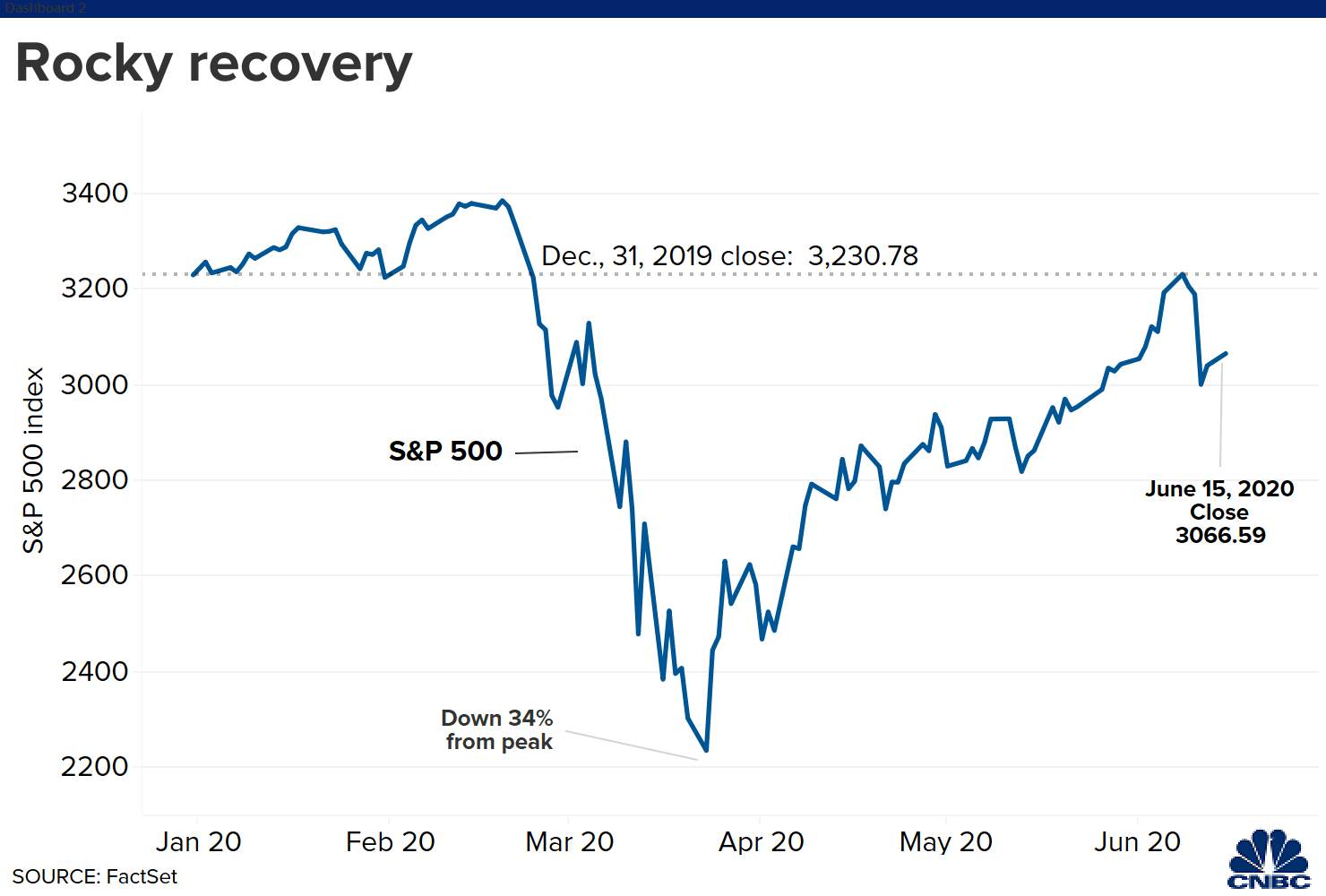
The central bank said it would buy individual corporate bonds and signaled a broader approach to corporate bond buying that had remained a matter of speculation until Monday afternoon. The Fed indicated earlier in the spring that it would buy bonds on the primary market, but Monday’s announcement expanded its operations into the secondary market.
All told, the Fed’s mid-June announcement represented yet another step by the Fed to backstop the financial markets and reassure investors that it will continue to support credit markets during the coronavirus.
“What appears to be new is the individual buying in the secondary market and what looks like, at least from the announcement, the potential for a wider variety of purchases,” Evercore ISI strategist Dennis DeBusschere wrote in an email Monday afternoon.
“The reason credit spreads are tight is because investors believe that they would follow through on the program,” DeBusschere added. “If they didn’t follow through, credit spreads would move significantly wider and the Fed would have to purchase even more debt to shore up credibility.”
The central bank’s announcement on Monday came less than one day before investors and politicians hear from Fed Chairman Jerome Powell. The Fed leader is set to speak before Congress on Tuesday and Wednesday in his semi-annual economic testimony with his appearance before the Senate coming first.
Wall Street will also pore over the latest retail sales figures — a key look at consumer spending activity — as well as industrial production and business inventories data on Tuesday.
Reprinted from CNBC,the copyright all reserved by the original author.
免責事項:本記事で述べられている見解は著者の見解のみであり、Followmeの公式見解を反映するものではありません。Followmeは、提供された情報の正確性、完全性、信頼性について一切責任を負いません。また、書面で明示的に記載されている場合を除き、本記事の内容に基づいて行われたいかなる行動についても責任を負いません。

古いコメントはありません。ソファをつかむ最初のものになりましょう。