


| Scenario | |
|---|---|
| Timeframe | Intraday |
| Recommendation | SELL STOP |
| Entry Point | 146.00 |
| Take Profit | 144.00 |
| Stop Loss | 147.00 |
| Key Levels | 144.00, 145.00, 146.00, 147.00, 148.21, 149.50, 150.50, 151.50 |
| Alternative scenario | |
|---|---|
| Recommendation | BUY STOP |
| Entry Point | 148.25 |
| Take Profit | 150.50 |
| Stop Loss | 147.00 |
| Key Levels | 144.00, 145.00, 146.00, 147.00, 148.21, 149.50, 150.50, 151.50 |
Current trend
During the Asian session, the USD/JPY pair shows mixed dynamics, consolidating in the area of 147.30. The instrument has only slightly increased in value since the beginning of the week, despite the intense macroeconomic background, as well as the rapid downward movement of the dollar against its main competitors.
In particular, the key July inflation statistics were released in the US yesterday: the Core Consumer Price Index in annual terms was adjusted from 3.3% to 3.2% in annual terms and from 0.1% to 0.2% in monthly terms, while the CPI fell from 3.0% to 2.9%, increasing pressure on the US Federal Reserve to ease monetary policy. The main scenario in the market still assumes the launch of the interest rate reduction program at the September meeting.
Japanese data released to the market today was mixed and failed to provide the expected support for the yen. The annual dynamics of Gross Domestic Product (GDP) in the second quarter increased by 3.1%, exceeding expectations by 1.0% and recovering from the decline at the beginning of the year thanks to an increase in consumption, and also confirming the need for another increase in interest rates in the short term. In quarterly terms, the indicator grew by 0.8%, compared to preliminary estimates of 0.5%. At the same time, Industrial Production volumes in June fell by 4.2% after –3.6% in the previous month, and in annual terms the figure fell from –7.3% to –7.9%.
The Bank of Japan forecast that a robust economic recovery would be the catalyst for inflation to reach its 2.0% target, justifying a further hike in borrowing costs after they were adjusted to 0.25% last month as monetary authorities sought to exit years of massive monetary stimulus. Public anger over rising living costs was a key factor in Japanese Prime Minister Fumio Kishida not seeking a second term as head of the country's ruling Liberal Democratic Party, but experts say early elections could be held in the autumn if approval ratings are high.
Support and resistance
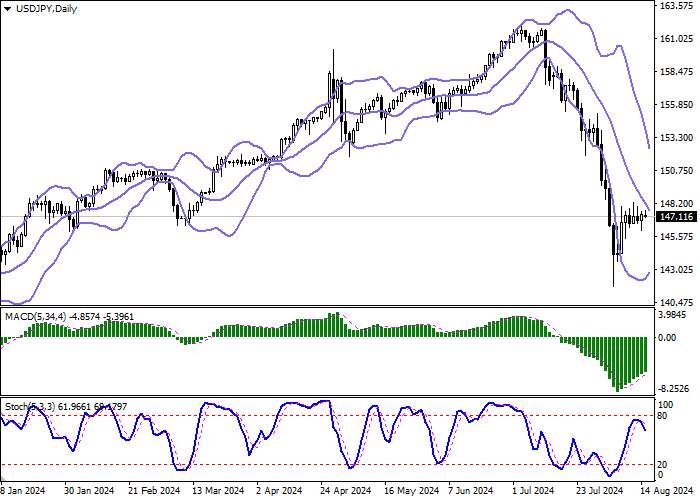
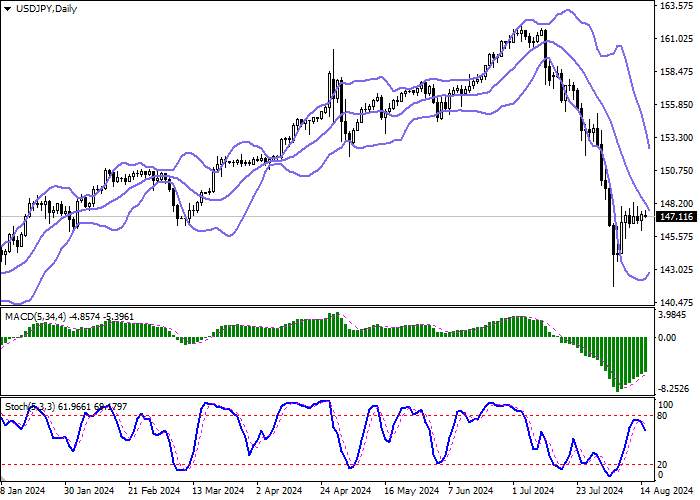
Bollinger Bands on the daily chart show a steady decline. The price range is narrowed, being spacious enough for the current activity level in the market. MACD indicator is growing, while preserving a rather stable buy signal (located above the signal line). Stochastic, having approached its highs, has reversed downwards, signaling in favor of the development of corrective decline in the near future.
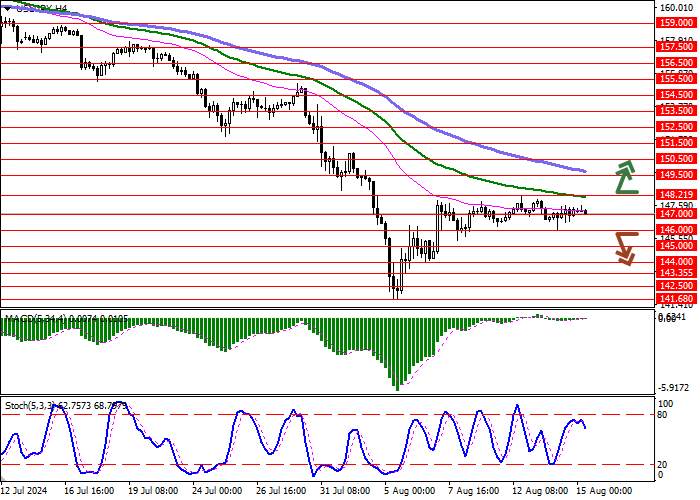
Resistance levels: 148.21, 149.50, 150.50, 151.50.
Support levels: 147.00, 146.00, 145.00, 144.00.
Trading tips
Short positions may be opened after a breakdown of 146.00 with the target at 144.00. Stop-loss — 147.00. Implementation time: 2-3 days.
The return of the "bullish" trend with the breakout of 148.21 may become a signal for new purchases with the target of 150.50. Stop-loss — 147.00.
免責事項:本記事で述べられている見解は著者の見解のみであり、Followmeの公式見解を反映するものではありません。Followmeは、提供された情報の正確性、完全性、信頼性について一切責任を負いません。また、書面で明示的に記載されている場合を除き、本記事の内容に基づいて行われたいかなる行動についても責任を負いません。

古いコメントはありません。ソファをつかむ最初のものになりましょう。