


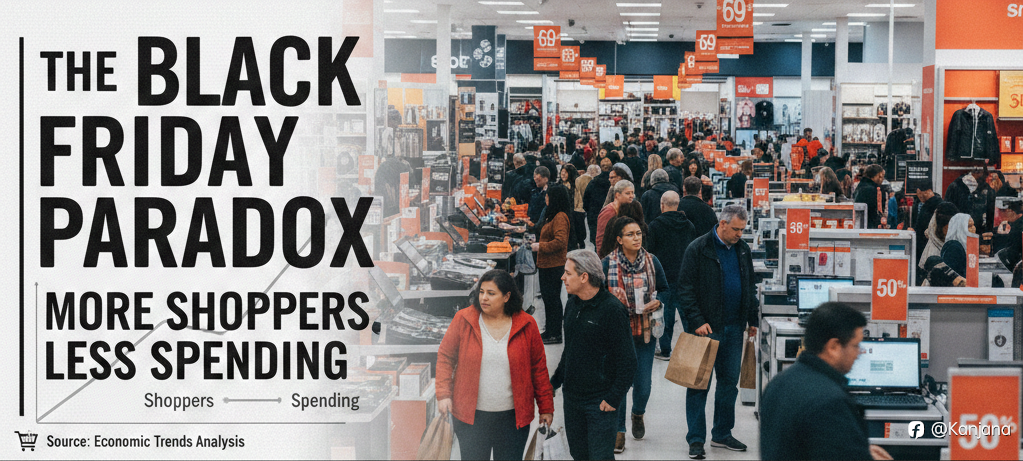
This year’s Black Friday brings a surprising twist: even though more people are out shopping, total spending hasn’t picked up as you might expect. Many stores have seen crowded aisles and long checkout lines — but the cash flowing through registers doesn’t seem to match the foot traffic.
The situation reflects a cautious mood among consumers. Shoppers are browsing sales and hunting for deals, but many are holding back on big purchases or sticking to essentials only. Inflation, higher living costs, and uncertainty about the economy seem to make people think twice before opening their wallets.
At the same time, retailers are offering discounts to attract buyers. While this can encourage some spending, for many shoppers it simply means stretching their budget instead of spending more overall. In effect, the deals may lead to more transactions — but smaller ones.
For businesses, this trend is a signal to adapt: more visitors don’t guarantee strong sales unless shoppers feel confident to spend. For consumers, it reveals a new reality: even big sales days don’t always translate to big spending.
Overall, this Black Friday paradox shows that shopping activity doesn’t always equal strong demand — and it serves as a reminder that economic conditions and consumer confidence remain key drivers behind spending.
免責事項:本記事で述べられている見解は著者の見解のみであり、Followmeの公式見解を反映するものではありません。Followmeは、提供された情報の正確性、完全性、信頼性について一切責任を負いません。また、書面で明示的に記載されている場合を除き、本記事の内容に基づいて行われたいかなる行動についても責任を負いません。

