


· Views 17,673

Market Review:
Global financial markets were rattled on June 8 as Israel and Iran exchanged their most significant direct strikes since the April ceasefire, reviving fears of a broader regional conflict and pushing energy prices sharply higher.
The Ceasefire That Broke Before It Was Sealed
The renewed hostilities began with an Israeli strike on Beirut, targeting Iran-backed Hezbollah. Tehran responded with missile attacks on Israeli airbases in the south, while Israel hit back with strikes across central and western Iran. Explosions were reported in Tehran, Tabriz, and Isfahan. To make matters worse, Israel also intercepted a ballistic missile launched from Yemen, a clear sign that this conflict is no longer a two-party affair.
What makes this round particularly significant is that it marks the first direct exchange between Israel and Iran since the April truce, meaning the ceasefire framework has now been formally breached by both sides.
Trump Steps In But Confidence Remains Thin
President Trump responded quickly, posting back-to-back statements urging both nations to stop shooting and claiming an "immediate ceasefire" was within reach. He also confirmed a direct call with Netanyahu, warning that further escalation risked perpetuating a cycle of conflict that had already lasted decades.
The posts temporarily lifted sentiment and helped oil pull back from session highs. However, an Iranian official told reporters that a deal is "no longer feasible at this stage" a direct contradiction of Washington's optimism. Until both sides confirm a formal halt, markets are unlikely to price in any lasting resolution.
Oil and Equities Bear the Brunt
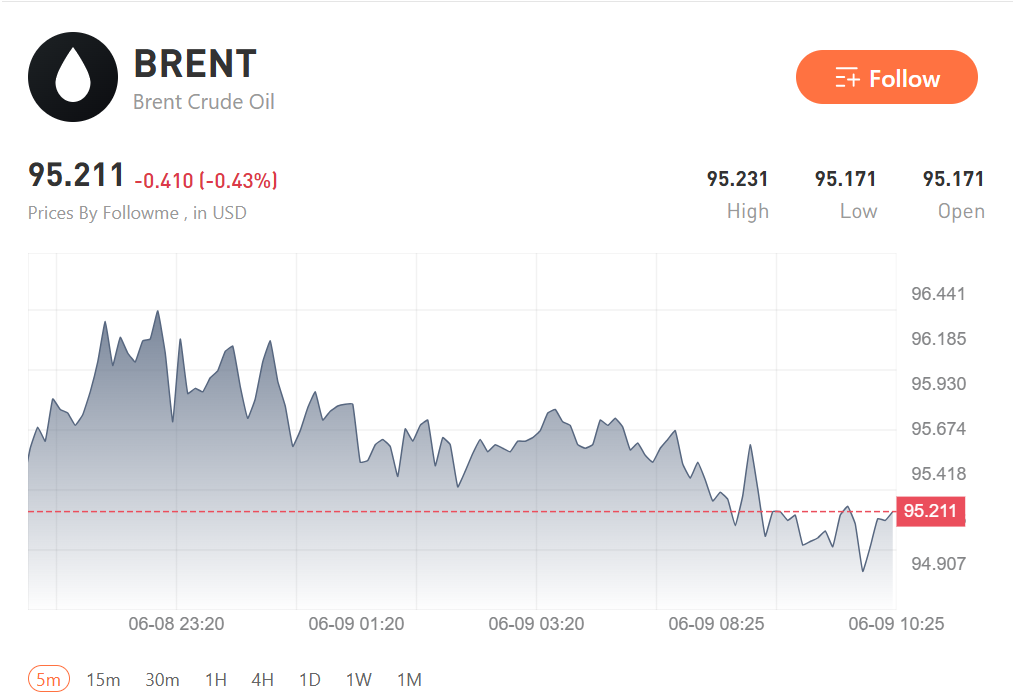
Brent crude surged roughly -0.41% to around $95.21 per barrel, with the Strait of Hormuz firmly back in focus. Iran holds considerable leverage over this critical waterway, through which approximately one-fifth of global daily oil supply flows. Any credible threat to restrict passage there would push prices well beyond current levels.
What Traders Should Watch This Week
The situation remains highly fluid. Key instruments to monitor closely include:
-
XAU/USD — Gold is the primary safe-haven barometer in this environment
-
Brent Crude / WTI — The most direct expression of geopolitical risk; watch the Strait of Hormuz
-
USD/JPY — Yen under pressure as safe-haven flows compete with dollar dynamics
-
U.S. equity indices — Remain vulnerable to sharp headline-driven swings
Beyond price levels, the most critical signals will come from Iranian officials on nuclear talks, any movement around the Strait of Hormuz, and whether Israel and Washington align their next steps, something that notably did not happen before this latest round of strikes.
Understanding the macro picture is what separates reactive traders from prepared ones.
Follow us for daily market insights, analysis, and the tools you need to trade with confidence.




Want to stay ahead of major macro developments that move the Forex market?
👉Follow Followme and check out the Weekly Economic Calendar
Download Followme Application
Follow us on:
免責事項:本記事で述べられている見解は著者の見解のみであり、Followmeの公式見解を反映するものではありません。Followmeは、提供された情報の正確性、完全性、信頼性について一切責任を負いません。また、書面で明示的に記載されている場合を除き、本記事の内容に基づいて行われたいかなる行動についても責任を負いません。
この記事が気に入ったら、著者にチップを送って感謝の気持ちを表しましょう。

古いコメントはありません。ソファをつかむ最初のものになりましょう。