



LEGENDS TRADING ICONS TECHNICAL ANALYSIS
Munehisa Homma: The Man Behind Every Candlestick
Before computers, algorithms, and Bloomberg terminals, there was a rice merchant in 18th-century Japan who figured out that markets run on emotion, and built a system to read it.
Followme Legends Desk | July 10, 2026
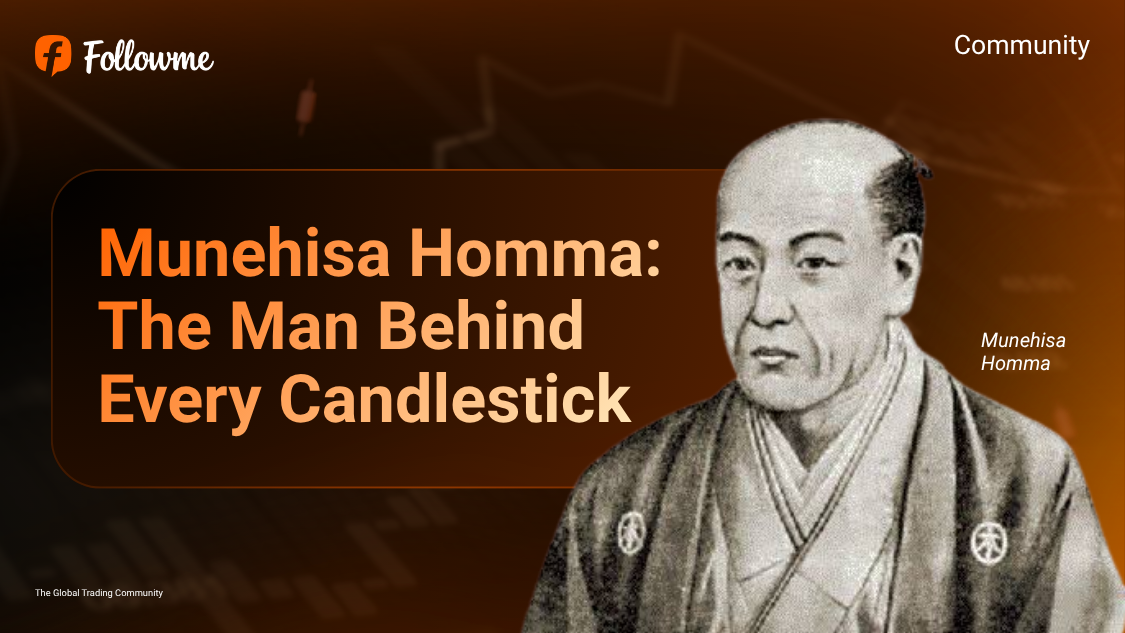
Nobody Moved Rice Like Homma
Munehisa Homma was born in 1724 in Sakata, Japan, into a wealthy rice merchant family. When he took over the business, he didn't just trade. He dug through decades of price records, studied weather patterns, tracked seasonal cycles, and built something that nobody else had bothered to build. A real understanding of why rice prices moved the way they did.
He also developed his own information network. He positioned at intervals on rooftops between Sakata and Osaka, passing signals by flag, covering the entire distance between the two cities. In an era before telegraphs, this was as close to real-time market data as anyone had ever gotten.
His conclusion was simple: supply and demand mattered, but they didn't explain everything. Homma realised that price movements were not solely determined by supply and demand, but also by the collective emotions and psychology of market participants. Fear and greed moved prices just as much as harvests did. That insight became the foundation of everything he built.
The System Behind the Charts
At the Dojima Rice Exchange in Osaka, the world's first organised futures market, Homma developed a method of recording price data that captured four things every session: the open, the high, the low, and the close. By drawing each session as a candle-shaped bar, Homma could read at a glance who was winning the day's psychological battle and how decisively.
The body told you who won: buyers or sellers. The wicks told you how far each side pushed before getting rejected. A long lower wick meant sellers tried hard and failed. A small body with wicks on both ends meant neither side could commit. A strong close near the high meant buyers were in control going into the next session.
He wasn't just recording prices. He was reading crowd psychology in real time, something that anticipated the arguments of behavioural finance by almost 250 years.
His approach had structure. He assessed the broader trend before reading individual candles. A bullish signal in a downtrend means something different than the same signal at a new high. He waited for the following session to confirm before acting. And he consistently faded extremes, operating on a principle he wrote down in 1755: "When all are bearish, there is cause for prices to rise. When everyone is bullish, there is cause for the price to fall."
Some accounts credit him with over 100 consecutive winning trades at the Dojima Exchange. His net worth is estimated at over $10 billion in today's dollars. He was eventually granted the honorary title of samurai, one of the few merchants in Japanese history to receive it.
More On: Four Patterns Worth Knowing
The patterns Homma identified 300 years ago are on every trading platform today. Here are four that still hold up.
🕯️ Hammer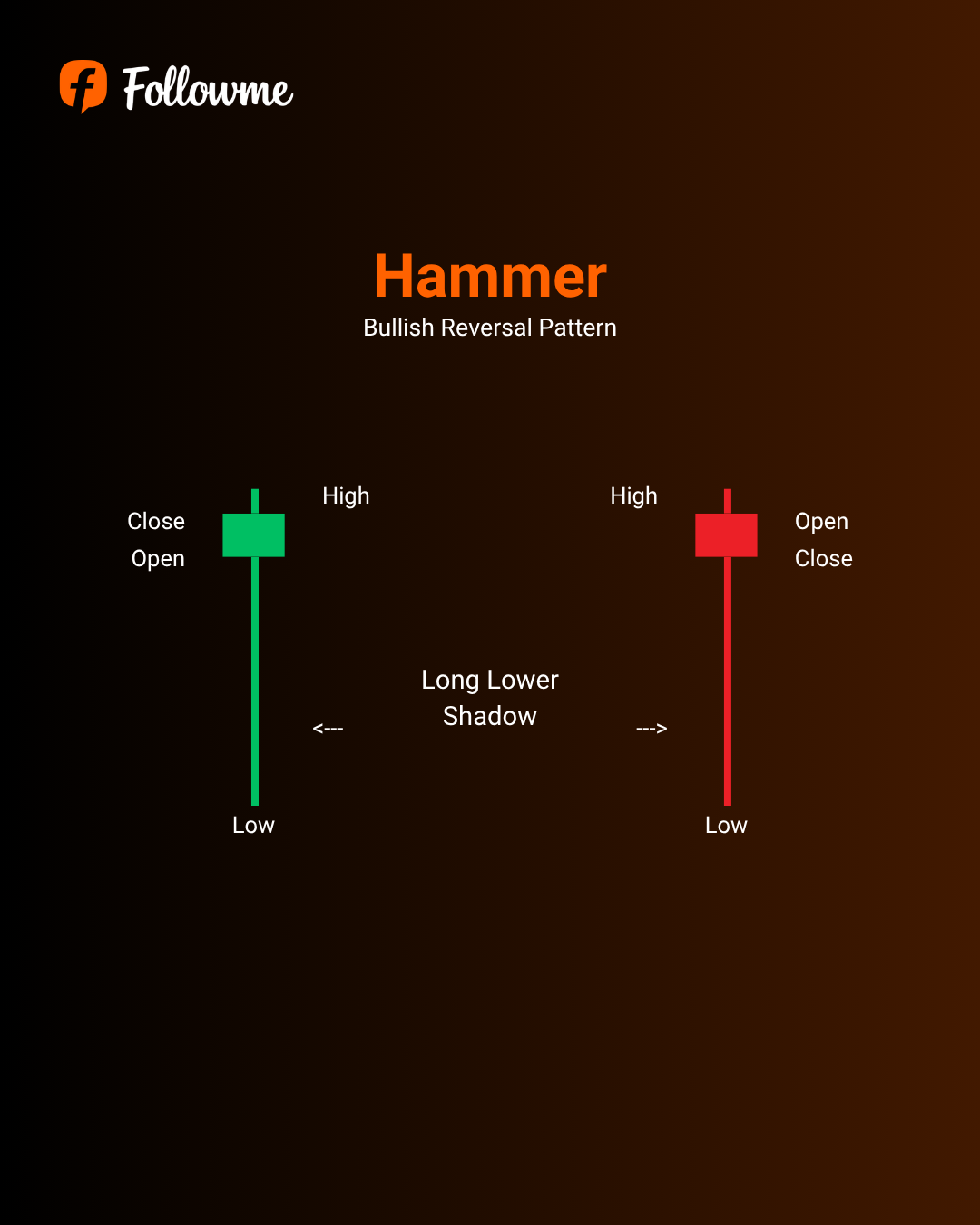 Picture a candle with a small body sitting at the top and a long tail hanging below. Sellers pushed hard during the session, buyers absorbed everything and drove price back up before the close. At the bottom of a downtrend, this tells you selling pressure may be running out. The candle raises the question. The next session answers it. |
🕯️ Shooting Star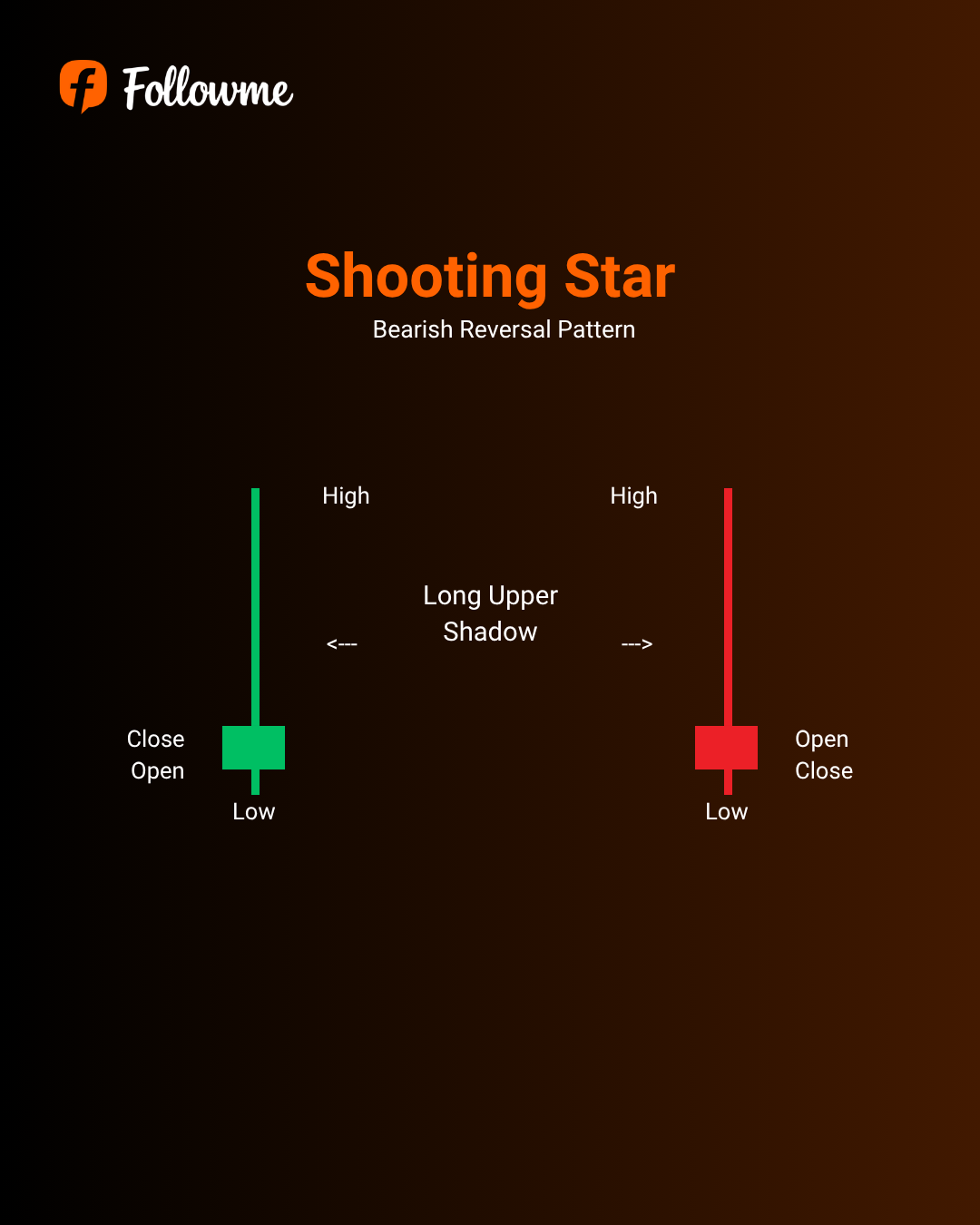 Same candle, different story. The body sits at the bottom, and the long wick this time reaches upward. Buyers pushed prices up through the session but couldn't hold it. The sellers took control into the close. At the top of an uptrend, it's a warning. Confirmation the next day before acting. |
🕯️ Engulfing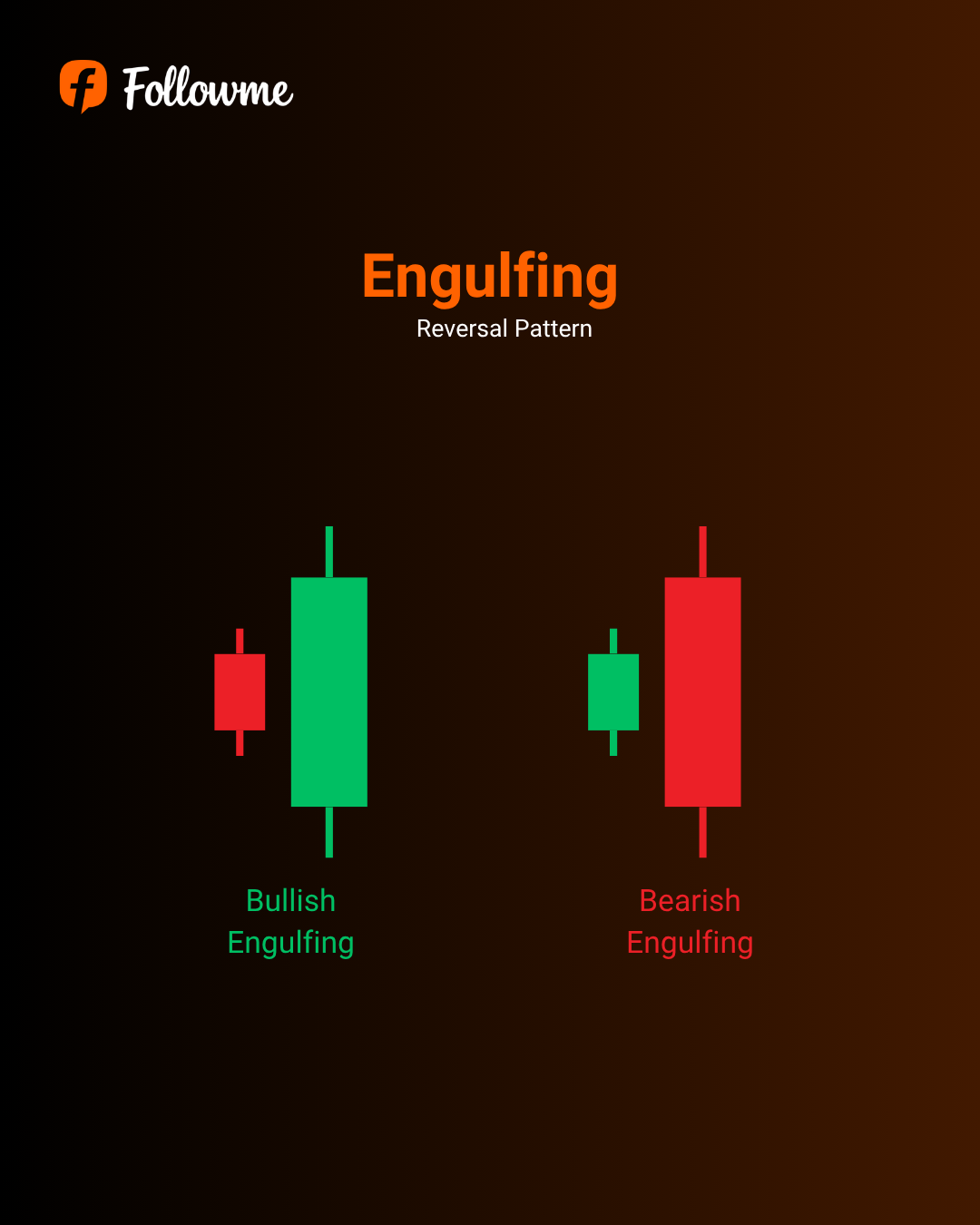 Two candles side by side, the second one is much larger than the first that swallows it entirely, closing in the opposite direction. When a bullish engulfing appears at a key support level, it means buyers didn't just push back, they overwhelmed sellers so completely that the entire previous session's move was reversed and then some. One of the cleaner reversal signals in the toolkit. |
🕯️ Doji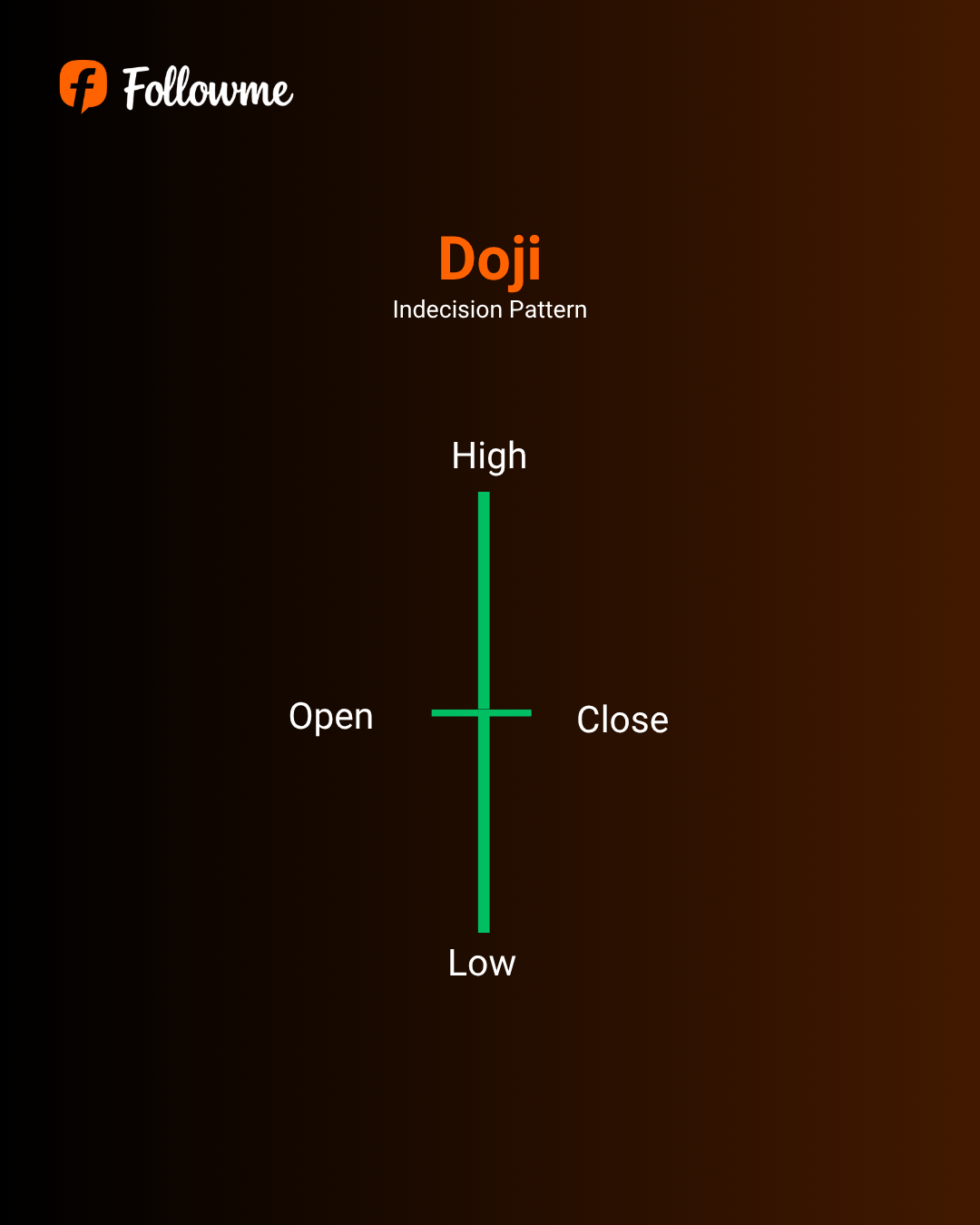 |
A Question Worth Sitting With
Candlestick charts stayed largely unknown outside Japan until Steve Nison published Japanese Candlestick Charting Techniques in the early 1990s, bringing the method to Western markets for the first time.
Three centuries after Homma developed them on rice paper in Osaka, the same patterns show up on Bitcoin charts, S&P futures, and forex pairs. They work for the same reason. They worked in 1750, not because markets behaved the same way, but because people did.
The patterns are free. They're on every platform. Most traders still misread them, act on single candles without context, and skip confirmation.
Homma's edge wasn't the charts. It was discipline to use them correctly.
Ready to Read the Market Like Homma?
Every week, we break down the traders, the trades, and the tools behind the biggest moves in market history. The kind of analysis that holds up, whether it was written in 1724 or today.
👉 Follow Followme and check out the Weekly Economic Calendar
July 10, 2026 | This article is for informational and educational purposes only and does not constitute financial advice. © 2026 Followme News




免責事項:本記事で述べられている見解は著者の見解のみであり、Followmeの公式見解を反映するものではありません。Followmeは、提供された情報の正確性、完全性、信頼性について一切責任を負いません。また、書面で明示的に記載されている場合を除き、本記事の内容に基づいて行われたいかなる行動についても責任を負いません。

-終わり-