



MARKET REVIEW FOREX OIL
Hormuz Standoff Lifts Oil, Yields and the US Dollar
Trump's rejection of Iran's truce offer pushes crude back above $90, sends Treasury yields to 2007 highs and firms bets on an October Fed hike
Followme News Desk | September 29, 2026
The week opened with diplomacy breaking down, and markets have been trading that ever since. Over the weekend Trump turned down Iran's latest proposal, a seven-day truce that included reopening the Strait of Hormuz. Oil rose at the open. By mid-morning in London, Brent was up about 4% at $108.65 and WTI had climbed above $96. Iran is holding to its conditions for reopening the waterway: release of frozen assets, an end to sanctions on its oil, and an end to the US naval blockade. Neither side has moved from its position.
Crude then gave back much of the rally. Qatari mediators said they would hold separate talks with Washington and Tehran. Iran's Foreign Minister Abbas Araghchi said proposals had been passed to Qatar for the US side and that Tehran expects Washington's answer through the same channel, possibly by Tuesday. He also said the conditions set by Iran's Supreme Leader must be met before Hormuz reopens. WTI settled at $92.60 and Brent at $105.28 on Monday. Both rose again in early Asian trade on Tuesday, with Brent at $105.91 and WTI at $93.32.
Supply is improving, but slowly and at extra cost. Kpler data show crude exports from major Middle Eastern producers reached 12.8 million barrels a day in September, the highest since February, helped by more shipments from Saudi Arabia and the UAE. Saudi Arabia has restored about half the flow through its East-West pipeline, which bypasses Hormuz, to at least 3.5 million barrels a day after drone strikes shut it earlier this month. KCM Trade's Tim Waterer pointed out that much of the extra volume depends on ship-to-ship transfers and other workarounds, which cost more and keep prices high. In his view, the recurring hope of a deal is the main thing keeping Brent from settling above $110.
The bond market is where the pressure is building. The 10-year Treasury yield rose above 5.2% on Monday, its highest since mid-2007. The 30-year topped 5.5%. The two-year gained about 5 basis points to 4.90%, which shows traders now treat oil shock as a problem for the policy rate and not only for term premium. The Fed raised rates by 25 basis points on September 16 to a 3.75%–4.00% range, its first increase in three years. CME FedWatch now puts the probability of a second consecutive hike on October 28 at about 70%.
The dollar has gained from both directions. Higher US yields support it, and so does safe-haven demand linked to the conflict. The greenback is holding near a two-month high. EUR/USD slipped to about 1.1376. USD/JPY is trading around 157.50, where Trump's recent remarks about yen weakness have revived talk of joint US-Japan intervention. Gold had its worst session in weeks, falling more than 3% to about $4,125. That is its lowest since August 5, as rising yields reduced demand for the non-yielding metal.
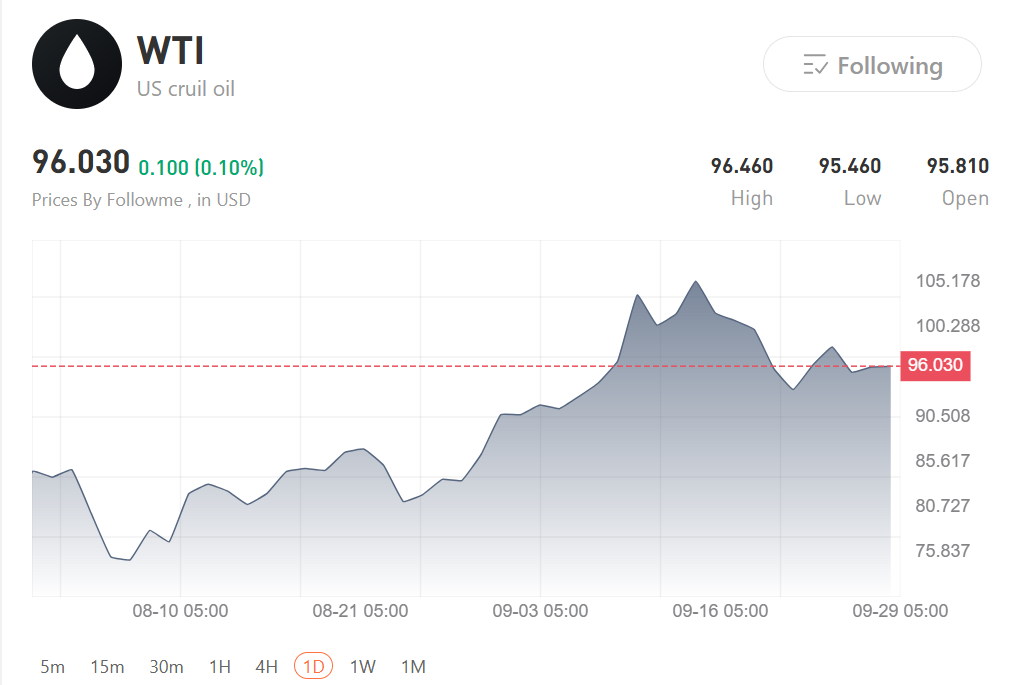
WTI price as of 29 September 2026 - View Live Chart →
The Facts
- Trump rejects Iran truce: Iran's seven-day truce plan, which included reopening Hormuz, was turned down. Tehran's conditions remain release of frozen assets, lifting of oil sanctions and an end to the US naval blockade.
- Qatari mediation: Iran has passed proposals to Qatar and expects a US response through the same mediators, possibly by Tuesday. Trump denied an Axios report that he had offered sanctions relief or released frozen Iranian funds.
- Oil prices: Brent at $105.91 and WTI at $93.32 in early Tuesday trade, a second straight daily gain. On Monday, crude rose more than $4 intraday before settling at $105.28 (Brent) and $92.60 (WTI).
- Supply workarounds: Middle Eastern crude exports reached 12.8 million barrels a day in September, the highest since February. Saudi Arabia's East-West pipeline is running at about half capacity, at least 3.5 million barrels a day.
- Red Sea risk: The Houthis now control Yemen's entire Red Sea coast, including the Bab al-Mandab Strait, a second major chokepoint for shipping.
- Fuel prices: UK diesel hit a record of just under £2 a litre. Washington is considering regulatory relief that would allow wider sales of red-dyed diesel to ease prices.
- Treasury yields: The 10-year is above 5.2%, the highest since 2007. The 30-year is above 5.5%, and the two-year is near 4.90%.
- Fed pricing: About 70% odds of a 25 basis point hike on October 28, following the September 16 increase to 3.75%–4.00%.
- Gold: Fell more than 3% on Monday to around $4,125, its lowest since August 5.
- US-China trade: The two countries agreed to cut tariffs on $60 billion of goods under a "30-for-30" framework. The list covers 1,619 US product lines, including corn, wheat, meat and medical devices, and 77 Chinese lines such as toys and household goods. Soybeans are excluded. China will buy at least 10 million tonnes of US coal in both 2027 and 2028, and the trade truce has been extended into January.
What It Means
Markets are once again being driven by one chain of cause and effect. Oil rises, inflation expectations follow, the Fed looks more likely to hike, yields climb, and the dollar strengthens. Monday's session showed that pattern clearly. The move in the two-year yield matters most here. When the front end leads the selloff, traders are betting on a higher policy rate and not simply demanding more compensation to hold long-dated debt.
That combination is a hard one for most non-dollar currencies. The US currency is supported if oil keeps inflation sticky, and it is also supported if the conflict escalates and investors look for safety. A clear de-escalation is the one outcome that would ease both sources of support together. That puts the Qatari mediation channel at the centre of this week's trading.
The supply picture is mixed. Exports are recovering and the Saudi pipeline is partly back in operation, which should limit how high prices can go. But with the Houthis controlling Bab al-Mandab and Hormuz still closed, the physical market is working through expensive detours. That keeps a risk premium in crude even when headlines improve. Oil has held around $90 despite better flow data, which suggests traders do not trust a diplomatic breakthrough until it actually happens.
The US-China deal would normally lift risk sentiment and commodity-linked currencies such as the Australian dollar. This week it is having little effect. It lowers the risk of another trade escalation, but it does nothing for the energy shock that is driving rate expectations.
What Traders Should Watch
WTI technical levels: Crude is holding above its 100-day moving average, which keeps the near-term bias positive. A sustained break above about $93.65 would open the way to around $100.80. On the downside, support sits near $86.55 and then at the 100-day SMA around $84.89. A drop through that zone would suggest the market is starting to price in a deal.
Qatari mediation headlines: Tehran hopes to receive Washington's reply by Tuesday. A credible path to reopening Hormuz would likely hit oil, yields and the dollar at the same time. Another rejection would put the $100 area on WTI back in view.
US 10-year yield at 5.2%: Rates are driving FX right now. If yields keep climbing, the dollar is likely to stay firm and gold is likely to stay under pressure. If they stall, that would be the first sign the move has run its course.
October Fed pricing: Watch whether hike odds rise from around 70% toward full pricing. The upcoming US data calendar and any comments from Fed officials will decide how close the market gets to treating October as certain.
Gold near $4,100: Metal is trading close to this level after its lowest close since early August. A clean break would confirm that rising real yields outweigh its usual safe-haven appeal.
USD/JPY and intervention risk: The pair is near 157.50, and talk of US-Japan joint action is limiting further gains even as the dollar stays strong. Expect sharp moves in both directions around official comments.
RBA decision (AUD/USD): The Reserve Bank of Australia is widely expected to raise rates to 4.60% on Tuesday. AUD/USD is holding just above 0.7000, and the guidance that comes with the decision will matter more than the hike itself.
The Bottom Line For now, one headline could shift several markets at once. As long as Hormuz stays closed, oil keeps inflation fears alive and the Fed stays on alert. If a deal emerges, the same trades are likely to reverse quickly. Traders should watch the Qatari channel, the 10-year yield and WTI's $93.65 level.
Follow us for daily market insights, analysis, and the tools you need to trade with confidence.
Want to stay ahead of major macro developments that move the market? 👉 Follow Followme and check out the Weekly Economic Calendar
September 29, 2026 | This report is for informational purposes only and does not constitute financial advice. © 2026 Followme News
Download Followme Application


Follow us on:


免責事項:本記事で述べられている見解は著者の見解のみであり、Followmeの公式見解を反映するものではありません。Followmeは、提供された情報の正確性、完全性、信頼性について一切責任を負いません。また、書面で明示的に記載されている場合を除き、本記事の内容に基づいて行われたいかなる行動についても責任を負いません。

